
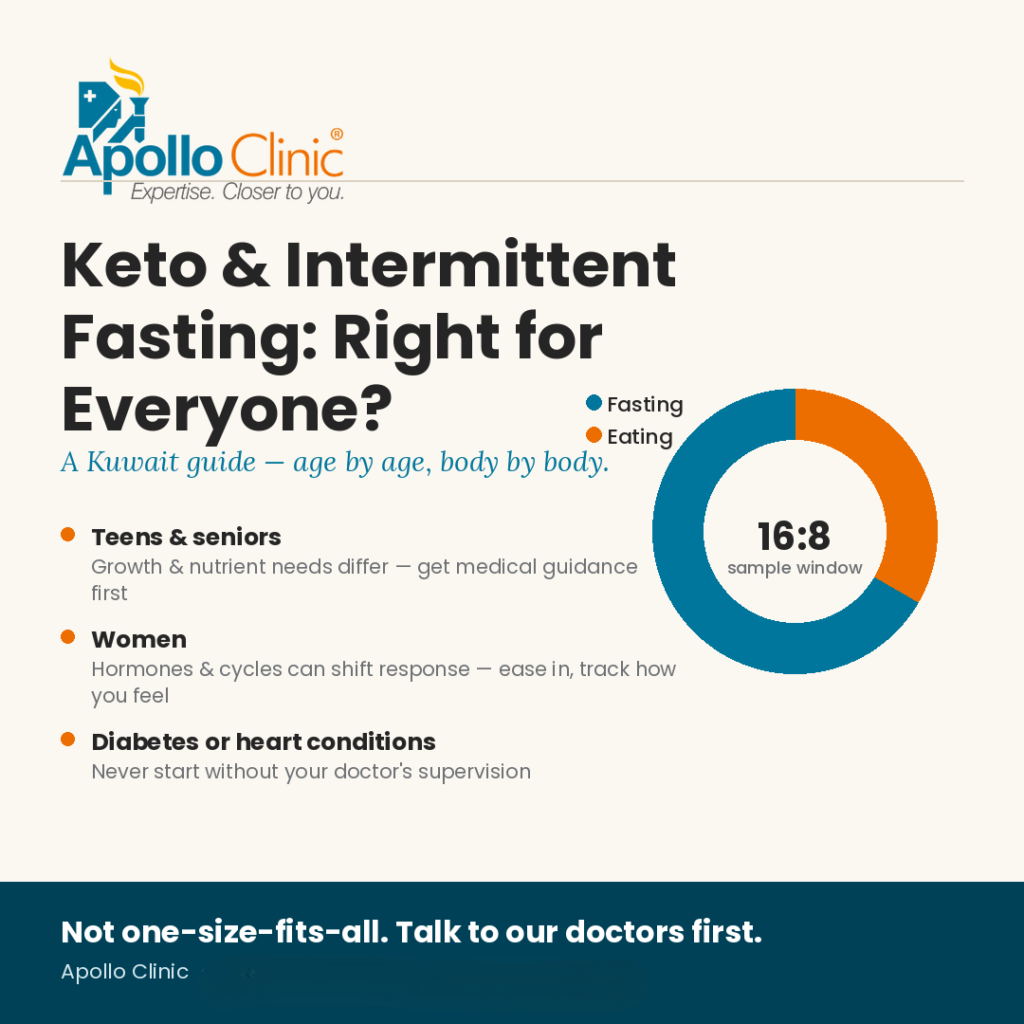
Quick answer: No single diet is universally safe. Keto (a very low-carb, high-fat diet) and intermittent fasting (eating within a limited daily window, such as 16:8) can help some healthy adults manage weight and blood sugar, but both carry real risks for specific groups — including teenagers, pregnant women, people with diabetes on medication, and anyone with a history of disordered eating. In UAE’s social and dietary context, the honest answer is: it depends on your age, sex, and health history, and it’s worth a conversation with a doctor before you start either one.
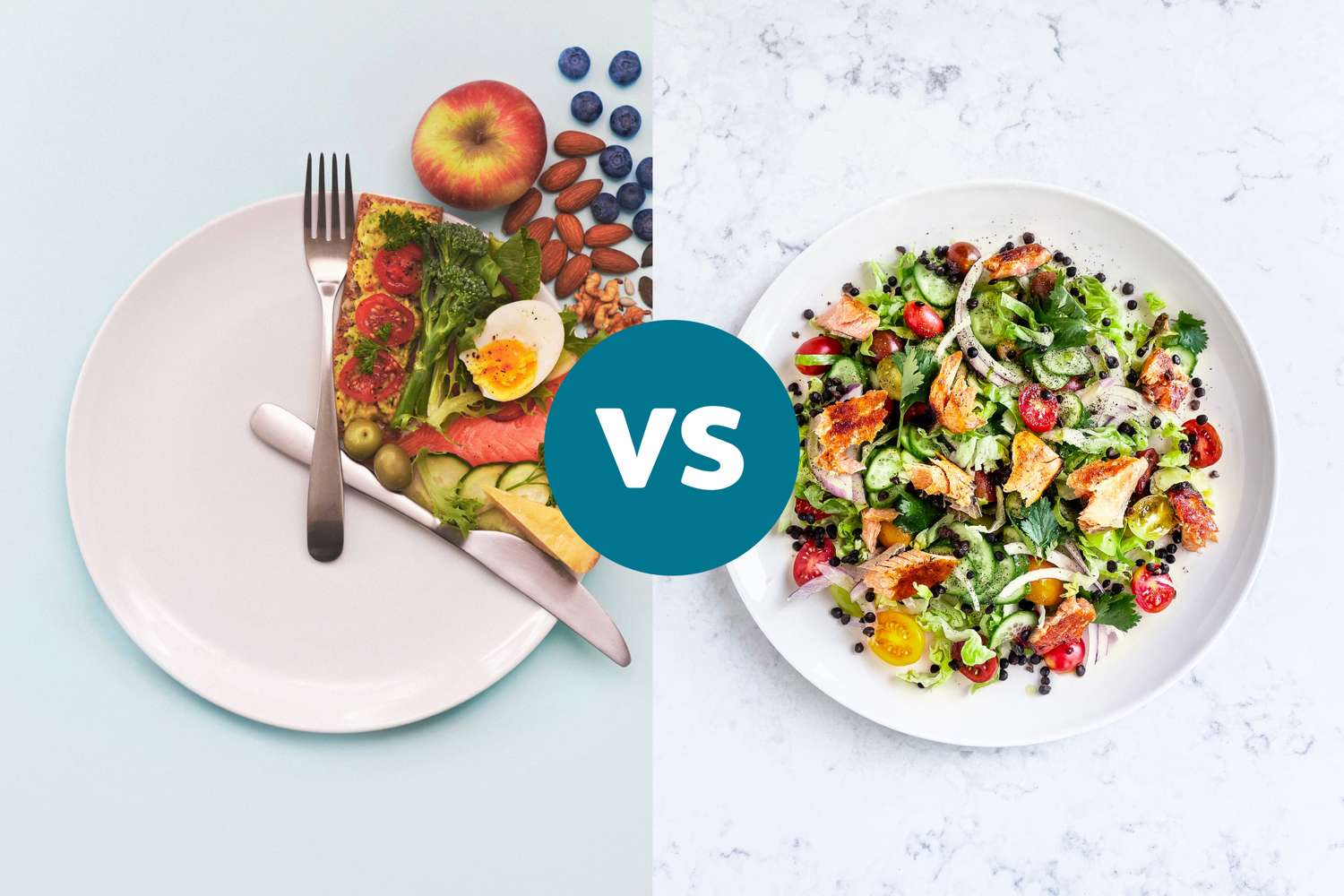
What Keto and Intermittent Fasting Actually Are
Keto (ketogenic diet): A diet that drastically cuts carbohydrates (often under 50g/day) and raises fat intake, pushing the body into “ketosis” — burning fat for fuel instead of glucose.
Intermittent fasting (IF): An eating pattern, not a diet in the food-choice sense. The most common version, 16:8, restricts eating to an 8-hour window and fasting for the remaining 16 hours. Other versions include alternate-day fasting and the 5:2 method (two low-calorie days per week).
Neither is inherently “healthy” or “unhealthy” — the effect depends heavily on who is doing it, how, and for how long.
Why This Matters in UAE Specifically
-
Family and social eating culture. Frequent gatherings, diwaniyas, and shared meals make restrictive eating windows or strict macros harder to sustain — and easier to abandon in ways that cause yo-yo effects.
-
Ramadan overlap confusion. Many people in UAE already practice a form of extended daily fasting during Ramadan. Layering keto or 16:8 on top of, or year-round in addition to, religious fasting needs its own medical consideration, especially around hydration and electrolyte balance in Kuwait’s heat.
-
High regional rates of diabetes and vitamin D deficiency. As covered in our earlier article on routine blood tests, prediabetes and diabetes are common in UAE, and undiagnosed cases make fasting or ultra-low-carb diets riskier without medical supervision (risk of dangerously low blood sugar on certain medications).
-
Heat and hydration. UAE‘s climate increases fluid and electrolyte loss, which interacts with both keto (which has a natural diuretic effect early on) and prolonged fasting windows.
Is It Right for Everyone? A Breakdown by Age and Sex
By Age
|
Age Group |
Considerations |
|---|---|
|
Teens (under 18) |
Still growing. Restrictive diets and fasting can interfere with normal growth, bone development, and nutrient intake. Generally not recommended without pediatric or specialist guidance. |
|
Young adults (18–35) |
Often the lowest-risk group for trying either approach, but still benefit from a baseline check-up first, especially if there’s a family history of diabetes or heart disease. |
|
Middle-aged adults (35–55) |
Higher likelihood of undiagnosed blood sugar, cholesterol, or thyroid issues — a routine blood panel before starting is strongly advised. |
|
Older adults (55+) |
Higher risk of muscle loss (sarcopenia), medication interactions (especially blood pressure and diabetes drugs), and nutrient gaps. Medical supervision is important, not optional. |
By Sex
Women: Hormonal sensitivity is the key difference. Some women report disrupted menstrual cycles, mood changes, or fatigue with aggressive keto or extended fasting windows — often tied to how these approaches affect reproductive hormones. Pregnant and breastfeeding women should avoid both keto and intermittent fasting unless specifically guided by an obstetrician, since the growing baby needs a steady, adequate nutrient and calorie supply.
Men: Generally tolerate both approaches with fewer hormonal disruptions, though men managing blood pressure or on medication for chronic conditions still need medical guidance, and performance-focused men (e.g., heavy weightlifters) may find strict keto limits workout recovery.
Who Should Avoid Keto or Intermittent Fasting Without Medical Supervision
-
Anyone with type 1 diabetes or type 2 diabetes on insulin or sulfonylureas (risk of dangerous low blood sugar)
-
Pregnant or breastfeeding women
-
Anyone with a current or past history of disordered eating
-
People with kidney disease (keto’s high protein/fat load can add strain)
-
Anyone on blood pressure or heart medication, since fasting and rapid water-weight loss can affect drug levels
-
Children and teenagers still in active growth
Potential Benefits (For the Right Person)
-
Short-term weight loss and reduced appetite
-
Improved blood sugar control in some non-insulin-dependent type 2 diabetics, under supervision
-
Simplified meal planning for some adults
-
Possible modest improvements in triglycerides for some people on keto
Potential Risks
-
Nutrient deficiencies (fiber, B vitamins, calcium) if not carefully planned
-
“Keto flu” — fatigue, headache, irritability in the first 1–2 weeks
-
Disrupted sleep or concentration during fasting windows, especially early on
-
Risk of binge-eating patterns forming around the eating window
-
Electrolyte imbalance, worsened by UAE‘s heat
Frequently Asked Questions
Can I do intermittent fasting and still eat a normal Dubai diet? Yes, in principle — IF governs when you eat, not what. That said, pairing it with keto (which restricts rice, bread, and many traditional dishes) is a much bigger lifestyle shift and needs more planning.
Is 16:8 fasting the same as fasting during Ramadan? No. Ramadan fasting also restricts fluids during daylight hours, while typical 16:8 intermittent fasting allows water, black coffee, and tea throughout. The physiological demands differ, and combining both requires care around hydration.
How do I know if keto is affecting my health negatively? Persistent fatigue, dizziness, irregular periods, hair thinning, or mood changes are signs to stop and get checked rather than push through. A blood panel can clarify what’s happening.
Do I need a blood test before starting either diet? It’s a good idea, especially for anyone over 35 or with a family history of diabetes, thyroid, or heart conditions. A baseline panel — blood sugar, lipids, thyroid, kidney function — gives your doctor a clear picture before you change your eating pattern.
Is intermittent fasting safe for someone with a desk job in UAE’s heat? Generally yes if hydration is maintained during eating windows, but anyone doing physically demanding outdoor work should be especially cautious with fasting windows during summer months.
The Bottom Line
Keto and intermittent fasting can be useful tools for some healthy adults, but neither is a universal fit — age, sex, existing conditions, and even UAE‘s climate and social eating patterns all change the risk-benefit balance. Before starting either one, a conversation with a doctor and a baseline blood panel is the safest first step.
Talk to Apollo Clinic UAE Before You Start
Apollo Clinic in Al Mahboula offers general medicine consultations and on-site lab diagnostics, so you can get a personalized read on whether keto or intermittent fasting fits your health profile — not a generic answer from the internet.
This article is for general information and does not replace an in-person medical assessment.

