
Key Takeaways
Obesity has become one of the UAE’s most significant health challenges, and morbid obesity — its most severe form — carries serious risks for the heart, joints, metabolism, and overall life expectancy. The good news: it is a recognised medical condition with a range of effective treatments, from lifestyle change to medication to bariatric surgery, and insurance in the UAE increasingly covers treatment when it is medically necessary.
· Nationwide adult obesity in the UAE stands at 27.8%, according to a Ministry of Health and Prevention (MoHAP) study, with women (30.6%) affected more than men (25.1%).
· Severe (morbid) obesity in the UAE rose from around 2% to 11% of adults between 2000 and 2018 as overall obesity rates doubled.
· A 2025 Dubai-based study found roughly half of Emirati women over 40 live with obesity, and about one in five have Class II or III (severe) obesity.
· Morbid obesity (BMI 40+, or BMI 35+ with serious related conditions) significantly raises the risk of heart disease, type 2 diabetes, sleep apnea, joint disease, and certain cancers.
· Weight loss is biologically difficult, not a matter of willpower — the body actively resists weight loss through hunger and metabolic hormone changes.
· UAE health insurers, including Daman and Thiqa, generally cover bariatric surgery for BMI 40+, or BMI 35+ with conditions such as diabetes or hypertension, subject to medical review.
Understanding Obesity and Morbid Obesity
Obesity is a medical condition involving excess body fat that negatively affects health, most commonly assessed using Body Mass Index (BMI) — a measure of weight relative to height.
| BMI Range | Classification |
| Below 18.5 | Underweight |
| 18.5 – 24.9 | Normal weight |
| 25 – 29.9 | Overweight |
| 30 – 34.9 | Obese (Class I) |
| 35 – 39.9 | Obese (Class II) |
| 40 or higher | Morbidly obese (Class III) |
Morbid obesity (BMI 40 or higher, or as low as 35 when serious weight-related conditions are present) is the stage at which excess weight actively damages health rather than simply affecting appearance. The heart works harder to circulate blood through a larger body, joints bear loads they weren’t built for, breathing and sleep are disrupted, and the risk of life-threatening disease rises substantially.
Why This Matters in the UAE
Obesity is not a marginal issue in the UAE — it is one of the country’s most pressing public health concerns, and the data shows it is rising quickly.
· Nationwide prevalence: A national study by the Ministry of Health and Prevention found adult obesity at 27.8% nationwide, with 30.6% of women and 25.1% of men affected.
· A rapid rise over two decades: Obesity among UAE adults doubled from 16% to 34% between 2000 and 2018, while severe (morbid) obesity rose from roughly 2% to 11% over the same period.
· Particularly high impact on Emirati women: A large 2025 study of adults attending Dubai’s public health facilities found that about half of Emirati women aged 40 and older live with obesity, and roughly one in five have Class II or III obesity — among the highest rates recorded for this group anywhere.
· Younger adults are increasingly affected: The 20–39 age group accounts for the largest share of weight-reduction surgeries performed nationally, suggesting many residents are seeking treatment earlier in adulthood rather than waiting.
Why Obesity Has Risen So Quickly in the UAE
The UAE’s rapid rise in obesity reflects a mix of factors layered on top of the universal drivers of weight gain: extreme summer heat that discourages outdoor activity for much of the year, a car-dependent urban environment that reduces incidental walking, a food culture built around frequent social gatherings and rich traditional dishes, and long working hours that leave little time for meal preparation or exercise. None of these make obesity a personal failing — they describe an environment that makes weight gain more likely and weight loss harder, which is exactly why medical support matters.
How Obesity Develops: More Than Diet and Exercise
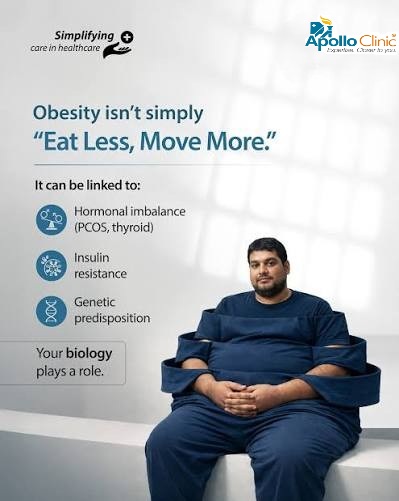
It’s tempting to think of obesity as simply eating too much and moving too little. In reality, it develops from several factors acting together, which is why “eat less, move more” alone often isn’t enough:
· Genetics: Genetics influences metabolism, appetite regulation, and fat storage; a family history of obesity makes weight management genuinely harder.
· Hormones and metabolism: Insulin resistance, thyroid dysfunction, and conditions such as PCOS all make weight gain easier and weight loss harder.
· Psychological factors: Food is a common coping mechanism for stress, anxiety, or emotional difficulty, and certain mental health conditions independently increase weight gain risk.
· Medications: Antipsychotics, antidepressants, and corticosteroids are among the medications known to cause weight gain as a side effect.
· Environment and lifestyle: Heat that limits outdoor activity, a food environment built around convenience and social eating, and long commutes or working hours all play a role.
Because multiple factors are usually involved, effective treatment typically needs to address more than diet alone.
Health Consequences of Morbid Obesity
· Cardiovascular disease: The heart works harder to pump blood through a larger body, raising blood pressure and the risk of heart attack and stroke.
· Type 2 diabetes: Excess weight, especially abdominal fat, drives insulin resistance; the great majority of people with type 2 diabetes are overweight or obese.
· Sleep apnea: Repeated pauses in breathing during sleep disrupt rest and increase cardiac risk — common in morbid obesity and often undiagnosed.
· Joint disease: Knees, hips, and the lower back bear unsustainable loads, accelerating osteoarthritis and reducing mobility.
· Fatty liver disease: Fat accumulation in the liver can progress to non-alcoholic fatty liver disease, now a leading cause of liver disease.
· Cancer risk: Obesity raises the risk of several cancers, including breast, colon, and endometrial cancer.
· Reduced life expectancy: Morbid obesity is associated with a 5 to 20 year reduction in life expectancy, depending on severity and associated conditions.
Why Weight Loss Is So Difficult
When the body loses weight, it responds by increasing hunger hormones and decreasing satiety signals, while lowering the rate at which it burns calories at rest. This is a biological response, not a lack of discipline — and it is particularly strong in people with morbid obesity, whose bodies have adapted to a higher set weight over time. This is also why very restrictive diets tend to fail: initial weight loss is often followed by regain, sometimes exceeding the original weight, once the restriction becomes unsustainable.
Treatment Options for Obesity and Morbid Obesity
Lifestyle Change: The Foundation
Regardless of what other treatment is used, sustainable changes in diet, activity, sleep, and stress management remain the foundation. This means shifting toward whole foods and portion awareness rather than restrictive dieting, starting with gentle, consistent movement, and addressing emotional eating patterns — changes that improve health even before significant weight is lost. For many people with morbid obesity, however, lifestyle change alone is not enough, and that is a medical reality, not a personal failure.
Medication
· Orlistat: Reduces fat absorption in the intestine; modest effect, available over the counter.
· Phentermine: An appetite suppressant used for short-term treatment.
· GLP-1 receptor agonists: Semaglutide and tirzepatide reduce hunger and increase satiety, producing considerably greater weight loss than older medications for many patients; these are increasingly prescribed for weight management, though weight regain is common if the medication is stopped.
Medication is generally most effective alongside lifestyle changes, and should be discussed with a doctor familiar with your specific health history.
Bariatric (Weight Loss) Surgery
For people with morbid obesity who have not achieved sufficient results with lifestyle changes and medication, bariatric surgery can be transformative, with average excess weight loss of 50 to 75% and frequent improvement or resolution of related conditions such as diabetes, hypertension, and sleep apnea.
· Gastric bypass: Reduces the stomach to a small pouch and reroutes part of the small intestine.
· Gastric sleeve: Removes part of the stomach, reducing its capacity.
· Gastric band: An adjustable band placed around the stomach to limit intake.
· Duodenal switch: Combines elements of bypass and sleeve; the most extensive option.
Candidacy generally follows international clinical guidelines: a BMI of 40 or higher, or 35 or higher with a significant obesity-related condition such as type 2 diabetes, hypertension, or severe sleep apnea.
Insurance Coverage for Bariatric Surgery in the UAE
Bariatric surgery in the UAE is a regulated procedure from an insurance standpoint. Major insurers, including Daman and Thiqa, generally cover it when a patient meets recognised medical criteria — typically a BMI of 40 or higher, or 35 or higher with a documented related condition — and coverage is usually approved following review by a multidisciplinary medical team and evidence of prior supervised attempts at non-surgical weight loss. Coverage details, required documentation, and any co-payment vary by policy, so confirming the specifics with your insurer and treating hospital before proceeding is an important early step.
Myths vs Facts About Morbid Obesity
.jpg)
| Myth | Fact |
| It’s just about laziness or willpower. | Genetics, hormones, psychology, and environment all play a role; biology actively resists weight loss. |
| Eat less and exercise more, and the weight comes off. | Hunger and metabolic hormones shift to resist weight loss, which is why simple calorie reduction often isn’t enough on its own. |
| It’s a cosmetic issue. | Morbid obesity is a serious medical condition that raises the risk of multiple life-threatening diseases and shortens life expectancy. |
| Bariatric surgery is the easy way out. | It is a major procedure requiring lifelong dietary change, supplementation, and follow-up care. |
| Once you lose the weight, it’s permanent. | Weight regain is common because of biological resistance; maintaining loss requires ongoing attention, though it becomes easier over time. |
When to Seek Help
Consider scheduling an appointment if your BMI is 30 or higher, you’re experiencing weight-related health issues such as diabetes, joint pain, or sleep apnea, or you’re interested in exploring medication or surgical options. Effective treatment usually involves a team: a primary care physician, a weight management specialist, a dietitian, an exercise professional, a mental health professional where emotional eating is a factor, and a bariatric surgeon if surgery is being considered.
A Comprehensive Weight Management Program at Apollo Clinic UAE
Because morbid obesity typically involves several contributing factors at once, Apollo Clinic UAE’s approach to weight management brings these disciplines together rather than treating them separately.
· Medical Weight Assessment : A comprehensive evaluation by a medical professional to determine the best course of treatment for weight management.
· Nutrition and Dietetics Support : Personalized meal plans, dietary guidance, and ongoing support to achieve health goals.
· Medical Weight Loss Programmes: Utilizing evidence-based strategies and tailored plans to support sustainable weight reduction and improve overall health.
· Bariatric Surgery Referral: A comprehensive surgical evaluation and pre-operative preparation to ensure patient readiness for weight loss surgery in Apollo Hospital, India
·
Conclusion
Obesity, and particularly morbid obesity, has become a significant and growing health concern in the UAE, shaped by both universal biological factors and conditions specific to life in the region. It is not a matter of willpower, and it is not untreatable. With options ranging from structured lifestyle support to medication to bariatric surgery — increasingly supported by UAE health insurance when medically indicated — meaningful improvement is achievable. The first step is a medical evaluation to understand your specific situation and the treatment path best suited to it.
Frequently Asked Questions
How common is obesity in the UAE?
A national MoHAP study found adult obesity at 27.8%, with women (30.6%) more affected than men (25.1%). Other research shows obesity roughly doubled between 2000 and 2018, and severe (morbid) obesity rose from about 2% to 11% of adults over the same period.
What BMI is considered morbid obesity?
A BMI of 40 or higher is classified as morbid (Class III) obesity. A BMI of 35 or higher combined with a serious weight-related condition, such as type 2 diabetes or severe sleep apnea, is also generally treated as morbid obesity for treatment purposes.
Does UAE health insurance cover bariatric surgery?
Many UAE insurers, including Daman and Thiqa, cover bariatric surgery when a patient meets recognised medical criteria — generally BMI 40+, or 35+ with a related condition — subject to medical review and evidence of prior weight-loss attempts. Coverage details vary by specific policy.
Why is obesity particularly high among Emirati women?
Research points to a combination of factors, including lower rates of physical activity, social and cultural patterns around food, and hormonal changes around midlife. A 2025 Dubai-based study found roughly half of Emirati women over 40 live with obesity.
Can weight loss medication replace surgery?
For some patients, newer medications such as GLP-1 receptor agonists produce substantial weight loss and may reduce or delay the need for surgery. For patients with more severe obesity or significant related health conditions, bariatric surgery often remains the most effective option. This is a decision to make with your treating doctor.
What’s the first step if I think I may have morbid obesity?
A medical evaluation to confirm your BMI, assess related health conditions, and discuss suitable treatment options — ranging from lifestyle support to medication to surgical referral — is the appropriate first step.
Medical Disclaimer
This article is intended for general information only and does not replace professional medical advice, diagnosis, or treatment. Obesity and morbid obesity are complex medical conditions; treatment suitability, including for medication and bariatric surgery, can only be determined by a qualified doctor after individual assessment. If you are struggling with your weight or your relationship with food, please reach out to a healthcare professional for support.