

Understanding Cardiac Stress Tests: Your Guide to Heart Health in Dubai
A cardiac stress test is a powerful diagnostic tool that helps healthcare providers identify underlying heart conditions. Whether you are experiencing new symptoms or managing existing risk factors, understanding how your heart performs under pressure is a critical step in maintaining your cardiovascular health.
Here is everything you need to know about stress testing, brought to you by the cardiology team at Apollo Clinic Dubai.
What is a Stress Test?
A stress test is a commonly performed procedure designed to evaluate how well your heart functions when it is working hard. During physical activity, your body needs more oxygen, forcing your heart to pump more blood. A stress test can reveal problems with blood flow within your heart that might not be apparent when you are at rest.
The test helps our specialists at Apollo Clinic Dubai determine:
-
How effectively your heart pumps blood.
-
Whether your heart muscle is receiving an adequate blood supply.
-
How your cardiovascular fitness compares to others of your age and sex.
-
If physical activity reproduces your symptoms, such as chest discomfort, shortness of breath, or a racing heartbeat.
Why Might You Need a Stress Test?
Your doctor may recommend a cardiac stress test to detect or evaluate heart problems, including:
-
Coronary artery disease: Blockages in the arteries that supply blood to your heart.
-
Arrhythmia: Rapid or irregular heartbeats.
-
Heart valve disease: Issues with the valves that regulate blood flow through your heart.
-
Heart failure: When the heart doesn’t pump blood as well as it should.
You might also need a stress test if you:
-
Have symptoms like angina (chest pain), dizziness, or shortness of breath.
-
Are planning to start a vigorous exercise program.
-
Need to monitor the effectiveness of current cardiac treatments.
-
Have high risk factors such as diabetes, high blood pressure, high cholesterol, or a family history of heart disease.
Types of Stress Tests Available
There are several methods for assessing heart function under stress. Depending on your health profile and needs, your specialist may recommend:
1. Exercise Stress Test
The most common type of stress test involves walking on a treadmill or riding a stationary bicycle. The speed and resistance are gradually increased while your heart rate, blood pressure, and electrical activity (via an EKG) are closely monitored.
2. Exercise Stress Echocardiogram
This provides more detail than a basic stress test. An echocardiogram (ultrasound of the heart) is performed before you start exercising and immediately after you reach your peak heart rate. This allows cardiologists to visualize the blood flow through your heart chambers and evaluate valve function in real-time.
3. Nuclear Stress Test
For a more advanced assessment, a safe radioactive tracer is injected into your bloodstream. Imaging scans take pictures of your heart at rest and after exercise, allowing specialists to clearly compare blood flow and pinpoint specific areas of blockage or muscle damage.
(Note: If you are unable to exercise due to joint pain or other conditions, Apollo Clinic Dubai offers medication-induced stress tests that safely simulate the effects of exercise on the heart.)
How to Prepare for Your Appointment
To ensure the most accurate results during your visit to Apollo Clinic Dubai, please follow these preparation guidelines:
-
Fasting: Do not eat anything for a few hours leading up to the test (your doctor will provide specific timeframes, especially for nuclear stress tests).
-
Caffeine-Free: Avoid all caffeine (coffee, tea, energy drinks, and certain pain relievers) for 24 hours prior to the test.
-
Medications: Consult your doctor about your current prescriptions. You may need to temporarily pause certain medications, like beta-blockers, on the day of the test.
-
Attire: Wear comfortable, lightweight clothing and sturdy athletic shoes suitable for walking or cycling.
Special note for diabetic patients: Do not skip meals entirely without consulting your care provider. Bring your glucose monitor to check your levels before and after the procedure.
What to Expect During the Test
-
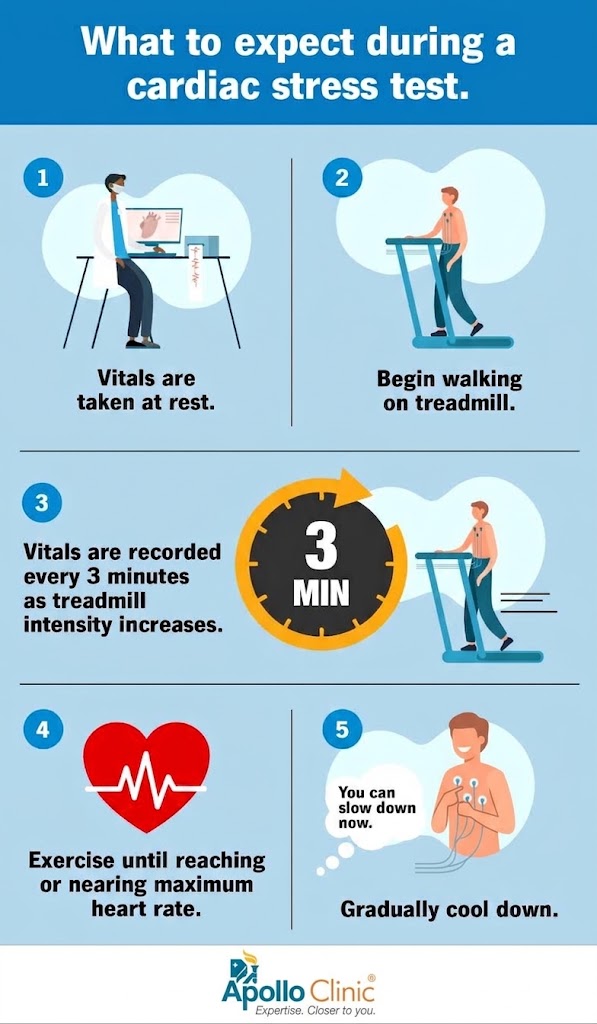
Preparation: A technician will record your resting vital signs and attach small, sticky electrodes to your chest and arms to monitor your heart’s electrical activity.
-
Exercise: You will begin walking on a treadmill or pedaling a bike at a slow, easy pace. The intensity will gradually increase.
-
Monitoring: Our team will continuously monitor your response and ask how you are feeling.
-
Completion: The active portion usually lasts 10 to 15 minutes, ending once you reach your target heart rate or if you experience severe symptoms.
-
Recovery: You will be monitored for about 15 minutes after the exercise stops until your heart rate and blood pressure return to normal.
Understanding Your Results
Once your test is complete, your cardiologist at Apollo Clinic Dubai will review the data.
-
Normal Results: Your heart is pumping effectively with adequate blood flow. Your symptoms may be unrelated to a cardiac issue, or you are cleared to begin that new exercise regimen or undergo a planned surgery.
-
Abnormal Results: This may indicate the early signs of heart disease. Depending on the severity, your doctor might recommend lifestyle modifications, new medications, or further diagnostic testing such as a coronary angiogram.
A Note from Apollo Clinic Dubai
Your heart works tirelessly for you every single day. If you are experiencing concerning symptoms or simply want to proactively manage your cardiovascular risk factors, an exercise stress test is a safe and highly effective diagnostic tool.
Ready to prioritize your heart health? Contact the cardiology department at Apollo Clinic Dubai today to schedule your consultation and take the first step toward a healthier future.