
Key Takeaways
A sound testing program gives you dependable evidence for design, construction, compliance, and investigation decisions.
- Define the project question before ordering tests.
- Match fieldwork and laboratory methods to the ground conditions.
- Check accreditation scope rather than relying on a logo alone.
- Ask for clear reporting, stated limitations, and realistic turnaround times.
- Interpret results alongside design requirements, site observations, and professional judgment.
What a geoscience testing laboratory in Dubai does
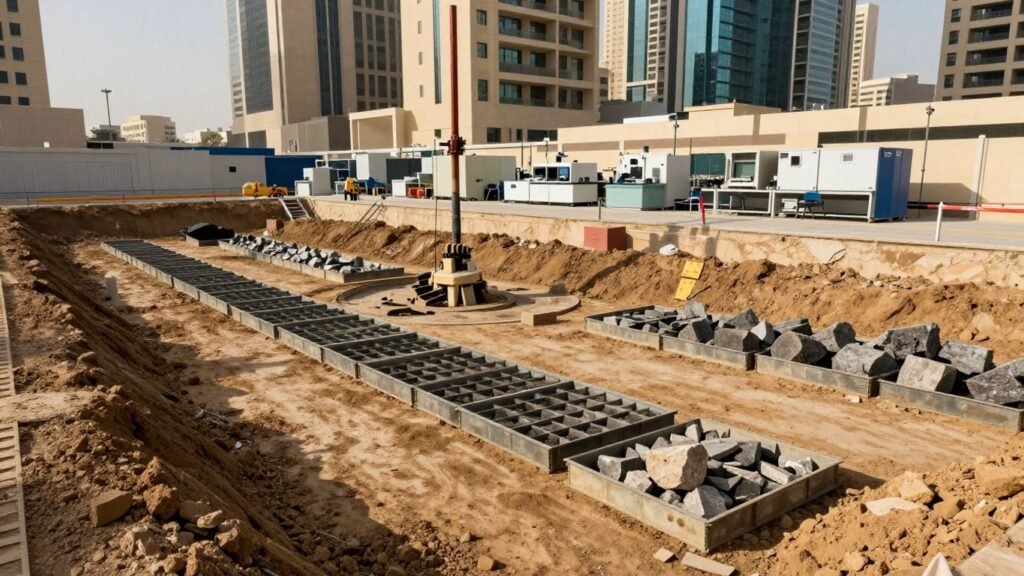
A geoscience testing laboratory in Dubai can connect what is found beneath a site with the decisions made above ground. Its work may include soil and rock investigation, construction materials testing, environmental analysis, and field measurements. The right combination depends on your project stage, site conditions, and the question you need answered.
Dubai sites can include loose sands, cemented layers, fill, and areas affected by groundwater or variable moisture. You therefore need a testing plan that is specific enough to be useful without ordering tests that do not support a decision.
Soil and rock investigation services
Soil and rock testing helps you understand strength, density, grading, moisture, compressibility, and other engineering parameters. Depending on the site, an investigation may also include boreholes, trial pits, sampling, and descriptions of strata. The results support decisions about foundations, excavation, retaining structures, pavement layers, and earthworks.
Before appointing a laboratory, clarify whether you need routine classification, strength testing, consolidation data, rock characterization, or a broader subsurface investigation. A geotechnical soil testing guide can help you frame the questions around Dubai soils, groundwater, and foundation design before you request quotations.
Construction materials testing
Construction materials testing examines whether materials have the properties required for their intended use. Common examples include soil, aggregate, concrete, cement, steel, asphalt, and water, although the exact scope varies between laboratories and accreditation schedules.
You should connect each test to a specification, drawing, purchase requirement, or acceptance decision. Results are more useful when the report identifies the sample, method, measured value, applicable requirement, and any qualification that affects interpretation.
Environmental and groundwater analysis
Environmental and groundwater analysis can address water quality, wastewater, soil, sediment, and related chemical parameters. The correct method depends on the suspected contaminant, regulatory objective, sample type, and reporting limit. A laboratory’s published scope may identify particular environmental chemistry methods, so you should compare that scope with your project brief rather than assume every laboratory performs every analysis.
For example, a laboratory page describing environmental chemistry testing may list defined water, wastewater, sediment, sludge, soil, or rock tests. That level of detail is useful because it lets you check whether the proposed method actually matches the sample and decision you are making.
Field testing and site investigation
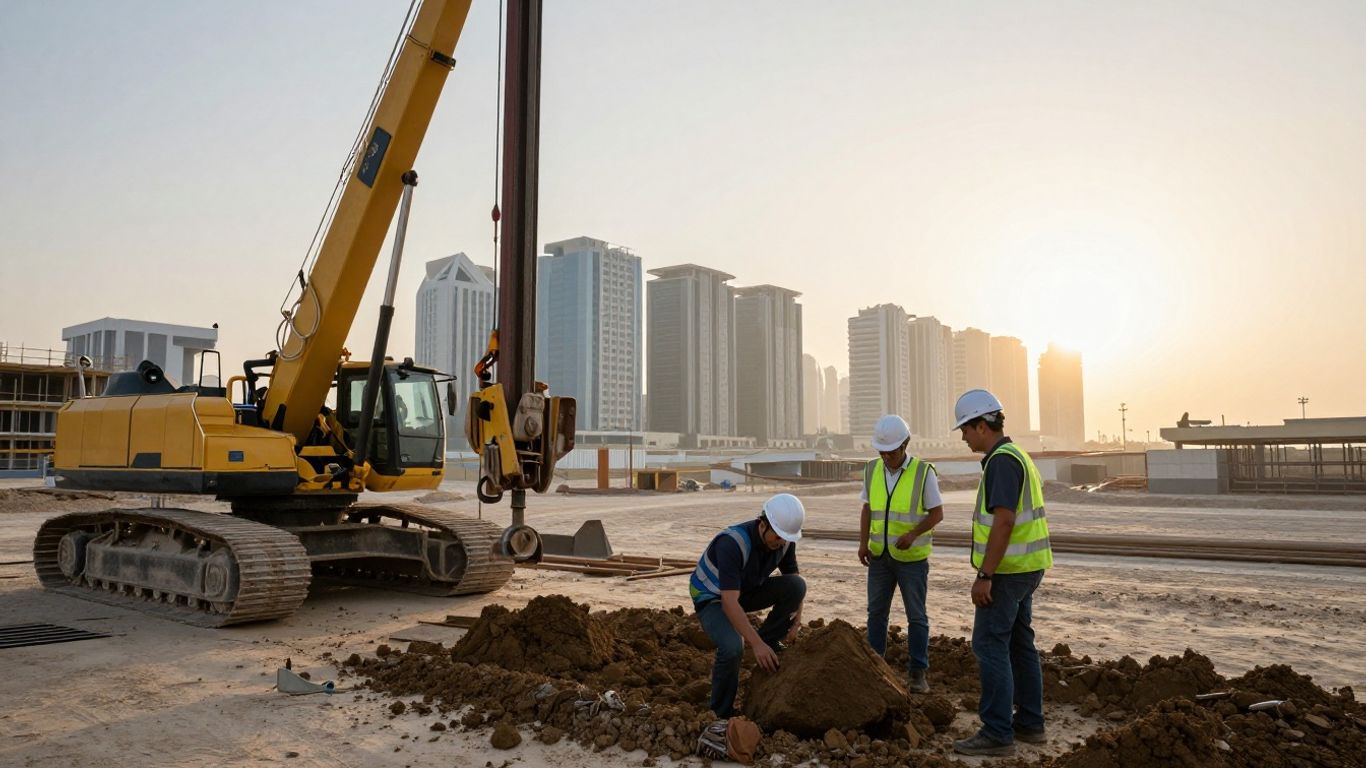
Fieldwork provides context that laboratory testing alone cannot supply. Site teams may record strata, groundwater observations, in situ resistance, density, compaction, or other measurements at selected locations. Field results should be coordinated with sample labels, plans, depths, dates, and the laboratory schedule.
The value of a field program depends on coverage as much as on individual readings. If locations are too sparse or selected without regard to variability, a technically correct test may still give you an incomplete picture of the site.
When geotechnical testing is needed
You may need geotechnical testing before design, during construction, after a defect appears, or when an existing asset is being altered. Testing is not limited to major towers; it can also support roads, utilities, retaining works, warehouses, villas, and remediation projects. The earlier you define the decision to be supported, the easier it is to select proportionate testing.
A useful program balances the consequences of uncertainty against the cost and time of investigation. It should also leave room to investigate unexpected conditions instead of treating the initial scope as unchangeable.
Planning tests for new developments
For a new development, you can begin by listing the proposed structures, anticipated loads, excavation depths, pavement requirements, and any groundwater concerns. That list helps the laboratory or geotechnical consultant propose locations and methods that relate to the design rather than supplying disconnected test results.
You should also consider neighboring structures, existing fill, underground services, access restrictions, and seasonal site conditions. A staged investigation may be sensible when an early program is needed for feasibility, followed by more detailed work for final design.
Assessing foundations and earthworks
Foundation and earthwork decisions require parameters that reflect the actual materials and construction conditions. You may need information about bearing behavior, settlement, compaction, moisture, shear strength, or the suitability of imported and excavated materials.
When reviewing a proposed scope, ask which design input each test will provide. If a test has no clear use in a calculation, specification, or acceptance decision, you may need to replace it with a more relevant method rather than simply expanding the test list.
Investigating settlement, cracking, or slope failure
When you are investigating settlement, cracking, or slope movement, start with observations: where the damage occurs, when it developed, whether it is changing, and what drainage or construction activity preceded it. Testing can then be targeted to distinguish between variable fill, weak layers, water effects, poor compaction, overloading, or other possible causes.
A report should separate measured evidence from interpretation. You may need additional boreholes, monitoring, or laboratory work if the first results do not explain the pattern of distress.
Supporting infrastructure and remediation projects
Roads, utilities, drainage systems, and remediation works often cross several ground conditions. Testing may therefore need to address material reuse, compaction, contamination, groundwater, pavement support, or compatibility with proposed treatment methods.
For these projects, coordination matters. Field teams, designers, contractors, environmental specialists, and the laboratory should agree on sample locations, preservation requirements, decision limits, and the format of interim reporting before work begins.
How laboratory testing and fieldwork are performed
Reliable results begin before a sample reaches the laboratory. You need a plan for locations, depths, quantities, containers, preservation, transport, and requested methods. The laboratory then combines field observations, controlled testing, calculations, review, and reporting.
No single test tells the whole story. A good program uses methods that answer the project question and records enough context for someone else to understand how the result was produced.
Collecting representative samples
A representative sample should reflect the material or condition you intend to assess. Sampling plans should consider changes with depth, visible layering, moisture, contamination risk, and the number of locations needed to capture variability. Disturbed and undisturbed samples serve different purposes, so the sampling method should match the requested test.
You should record the location, elevation or depth, date, sampler, material description, and any unusual observation. Those details can be as valuable as the numerical result when you compare different parts of a site.
Using in situ testing methods
In situ testing measures conditions in place and can reduce some of the uncertainty created by removing material from its natural setting. Depending on the project, methods may assess resistance, density, compaction, permeability, or other field properties.
Results should be reviewed with the equipment, operator, weather, access, and ground condition in mind. A field value without location and test context is difficult to compare or use responsibly.
Applying laboratory test standards
Laboratory methods should be selected from the project specification, authority requirement, or recognized standard appropriate to the material. You should confirm whether the requested method is current, whether deviations are permitted, and whether the laboratory is accredited for that exact method.
A well-written report identifies the method used and makes clear whether the result is a measured value, a calculated value, or an interpretation. Clear method references matter because they allow designers and reviewers to understand what the number means.
Managing sample handling and chain of custody
Chain of custody is especially important when results may support compliance, dispute resolution, environmental decisions, or formal acceptance. Each transfer should preserve the link between the sample collected in the field and the sample tested in the laboratory.
A practical handling sequence may include:
- Assigning a unique sample identification.
- Sealing and labeling the container at collection.
- Recording preservation and transport conditions.
- Documenting receipt, storage, preparation, and disposal.
This sequence does not replace technical judgment, but it makes discrepancies easier to identify. If a sample arrives damaged, late, short, or mislabeled, the report should state the issue and explain any effect on confidence in the result.
How to evaluate laboratory accreditation and quality
Accreditation is useful when you understand what it covers. It does not automatically mean that every service, material, or method offered by a laboratory is accredited. You should examine the current scope, the reported method, and any conditions or limitations attached to the work.
Quality also depends on competent staff, maintained equipment, controlled procedures, suitable facilities, and effective review. A laboratory that communicates clearly about those controls is easier to assess and easier to work with.
Checking accreditation scope
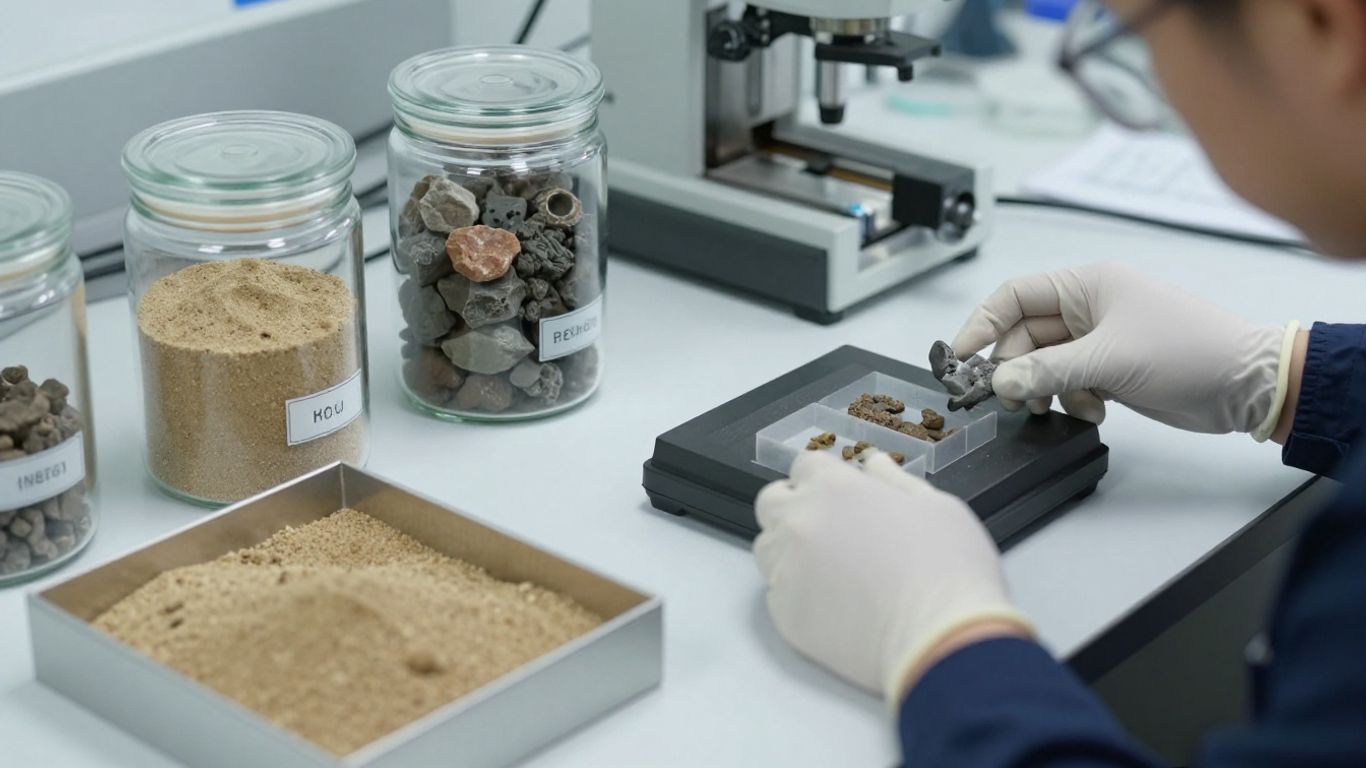
Ask for the laboratory’s current accreditation certificate and detailed scope. Check the sample type, property, test method, and relevant range rather than accepting a general statement that the facility is accredited.
The scope should align with the services in your quotation and report. If a requested test falls outside the accredited scope, the laboratory should tell you directly and explain how that status will appear in the final documentation.
Confirming applicable standards and methods
Your request should name the material, parameter, and standard where possible. If you are unsure, ask the laboratory to explain the proposed method and why it is suitable. This is particularly important when a specification permits more than one standard or when results from different methods are not directly interchangeable.
You can also review a broader laboratory selection guide for practical questions about defining the testing objective, comparing methods, and checking reporting arrangements. Although laboratory services vary by field, those selection habits apply well to geoscience work.
Reviewing equipment calibration procedures
Calibration gives you confidence that equipment readings are traceable to an appropriate reference. Ask how calibration status is checked, what happens when equipment is found out of tolerance, and whether intermediate checks are performed between formal calibrations.
You do not need to manage the laboratory’s internal system yourself. You do need enough information to judge whether equipment control is appropriate for the precision and decision limits required by your project.
Assessing technician competency and quality control
Competency includes training, supervised experience, method familiarity, and the ability to recognize an unusual result. Quality control may include duplicate samples, reference materials, blanks, repeat testing, technical review, and documented corrective action.
A calm, specific answer to your quality questions is often more informative than a broad marketing claim. If results will support a major design or compliance decision, ask how the report is reviewed before release.
How to choose the right geoscience testing laboratory in Dubai
Choosing a geoscience testing laboratory in Dubai is a project decision, not just a price comparison. You need to compare technical scope, accreditation, field coverage, communication, reporting, and practical availability. The best fit is the laboratory that can answer your questions clearly and deliver evidence in a form your design or construction team can use.
Apollo Clinic is a multispecialty clinic in Karama, Dubai, so its own healthcare setting is distinct from a construction laboratory. That distinction is a useful reminder to verify a provider’s actual discipline and scope rather than relying on the word “laboratory” alone. The same careful approach used when considering accredited investor status, German car condition, engineered wood flooring, or CO2 laser resurfacing does not make those subjects geoscience services; it simply illustrates why the specific evidence behind a service matters.
Matching capabilities to project requirements
Start with a short technical brief: project type, location, expected materials, field services, required standards, reporting deadline, and the decision the results will support. Send the same brief to each candidate so the quotations can be compared fairly.
Apollo Clinic’s documented positioning is patient-focused healthcare with clear medical guidance, not geotechnical testing. For your construction project, therefore, you should look for a laboratory whose documented capabilities literally cover the relevant soil, rock, material, environmental, or field methods.
Comparing turnaround times and reporting
A fast result is not useful if the sample was mishandled, the method is unclear, or the report omits limitations. Ask whether the quoted turnaround begins at collection, laboratory receipt, or approval of the test request. Confirm how urgent findings, amended reports, and incomplete results will be communicated.
You should also request a sample report or report index. Check whether it includes sample identification, dates, methods, units, results, quality notes, and authorized review. Clear reporting should reduce questions rather than create a second investigation.
Evaluating technical experience and local conditions
Local experience can help a team anticipate access constraints, fill, groundwater, hot weather, and variations between nearby sites. It should not replace project-specific investigation, however. Ask for examples of relevant work types, method experience, and how unexpected conditions are escalated.
Apollo Clinic’s role as a multispecialty clinic does not establish construction-testing expertise. For this article’s subject, you should assess the laboratory’s geoscience credentials directly and keep healthcare-provider information separate from technical laboratory evidence.
Reviewing quotations, scope, and exclusions
A quotation should state the number of samples or locations, methods, units, field attendance, report format, taxes, mobilization, retesting, and exclusions. Ambiguous wording can make a low initial price difficult to compare with a more complete proposal.
Before approval, ask who is responsible for permits, access, sample transport, disposal, traffic control, and interpretation. A short written clarification at the beginning is usually easier than a scope dispute after fieldwork has started.
How to interpret geoscience testing reports
A test report is evidence, not a design by itself. You need to read the result alongside the project specification, drawings, ground model, field notes, and assumptions used by the engineer. A number can be technically correct while still being unsuitable for a particular design decision.
Begin with the report identity and scope, then review the results and limitations. If something seems inconsistent, ask the laboratory or geotechnical professional to explain it before using the result in construction.
Understanding soil and rock parameters
Soil and rock parameters describe behavior under defined conditions. Moisture content, density, particle-size distribution, strength, compressibility, and weathering descriptions each answer different questions. Their meaning depends on the sample, method, units, and whether the result is representative of the design area.
You should avoid treating one test value as a universal property of the entire site. Compare results by location and depth, look for patterns, and ask how variability has been included in the design model.
Reviewing material compliance results
Compliance reports should identify the requirement being tested and show whether the measured result meets it. Check the sample source, lot or delivery reference, test date, method, units, and acceptance criteria. “Pass” or “fail” without that context is difficult to audit.
If a result is close to a limit, confirm the applicable rounding rules and any retesting provisions. The engineer, consultant, or approving authority may need to decide how borderline results affect acceptance.
Identifying limitations and unusual findings
Read the comments, qualifications, and limitations rather than focusing only on the result table. Missing samples, insufficient quantities, disturbed material, delayed testing, equipment issues, or unusual observations may change how confidently you can use the data.
Unusual findings deserve a measured response. They may indicate real ground variability, a sampling problem, a transcription issue, or a condition that requires further investigation. Ask for clarification and preserve the original report when an amended version is issued.
Using test data in design and construction decisions
Use test data as one part of a controlled decision process. The designer may combine laboratory results with field observations, calculations, monitoring, specifications, and construction records before approving a foundation, earthwork layer, material source, or remediation step.
A clear decision record should state which result was used, what assumption accompanied it, who reviewed it, and what action follows. That approach helps you maintain traceability when site conditions change or questions arise later.
Conclusion
The right geoscience testing laboratory gives you more than a set of numbers: it gives you traceable evidence suited to a real project decision. Define your questions, match methods to site conditions, check accreditation scope, and insist on reports that explain both results and limitations. With that foundation, you can use testing data more confidently in design, construction, compliance, and investigation.
Frequently Asked Questions
What does a geoscience testing laboratory in Dubai test?
It may test soil, rock, aggregates, concrete, cement, steel, asphalt, water, groundwater, sediment, or other materials, depending on its documented technical and accreditation scope.
When should you arrange geotechnical testing?
Arrange it before design when possible, and also when you are investigating settlement, cracking, slope movement, unsuitable fill, construction variability, or unexpected groundwater.
Is accredited testing always required?
The requirement depends on the project specification, authority, contract, and intended use of the result. Even when accreditation is not mandatory, checking scope and quality controls can improve confidence in the work.
How long does geotechnical testing take?
Turnaround varies with field access, sample volume, test duration, method, review requirements, and whether a preliminary or final report is requested. Ask when the clock starts and what could delay delivery.
What should a laboratory quotation include?
It should identify locations or samples, field services, test methods, standards, quantities, reporting format, turnaround, exclusions, retesting terms, and any costs for mobilization, transport, or urgent work.
How should you respond to an unexpected result?
Check the sample identity, method, units, field notes, and report qualifications first. Then ask the laboratory or project geotechnical professional whether clarification, repeat testing, monitoring, or additional investigation is appropriate.
Can laboratory results replace a geotechnical engineer’s advice?
No. Laboratory results provide measured evidence, while design and construction decisions require professional interpretation in the context of the site, loads, drawings, specifications, and applicable requirements.