
Is Proton Therapy Safer Than Traditional Radiation Therapy?
Key Takeaways
For certain cancers, proton therapy has been associated with fewer severe side effects than conventional photon-based radiotherapy, while achieving similar cure and survival rates. This does not mean proton therapy is automatically “safer” for every patient — the benefit depends on the tumor type, its location, and whether nearby healthy organs are at risk from radiation exposure.
· A large University of Pennsylvania/Washington University study found proton therapy reduced severe (grade 3+) side effects requiring hospitalization by about two-thirds compared with conventional radiation, with similar cure rates.
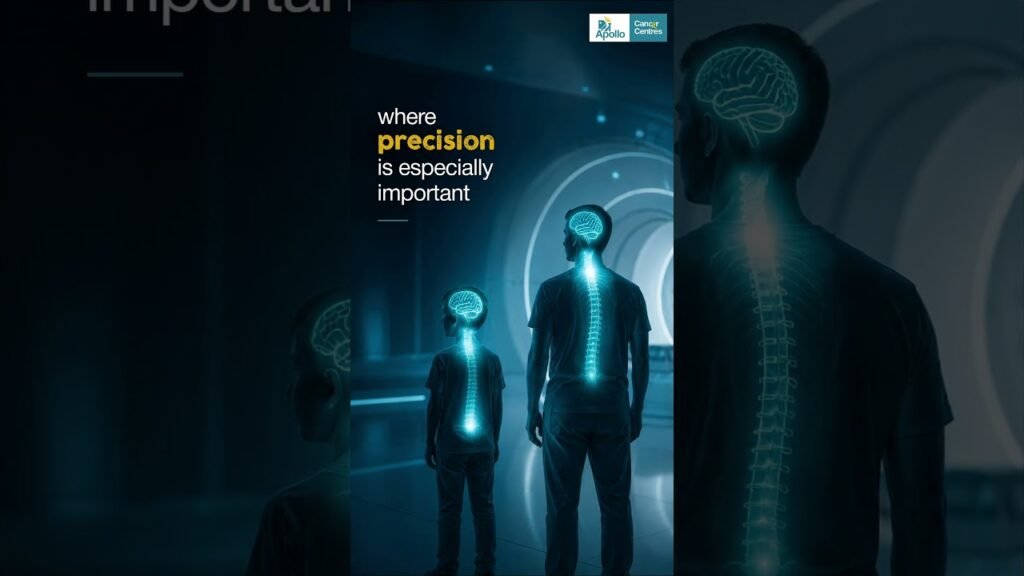
· The safety advantage comes from physics, not just technique: protons deposit most of their energy at the tumor and very little beyond it, unlike X-rays, which pass through the body.
· The benefit is most established for tumors near critical organs, pediatric cancers, and cases requiring concurrent chemotherapy.
· Proton therapy is not proven to be safer for every cancer type — evidence varies by tumor site, and for some cancers the difference may be small.
· Apollo Proton Cancer Centre, Chennai, is South Asia and the Middle East’s only proton therapy facility.
· UAE-based patients can start the evaluation process through Apollo Clinic UAE to determine whether proton therapy is appropriate for their specific case.
Why This Question Matters
When a patient or family is choosing between radiation options, the discussion is rarely only about which treatment cures the cancer — both proton and conventional radiotherapy can be curative for many cancers. The more practical question is often which approach causes fewer side effects, both during treatment and afterward. This is the question this article addresses: not whether proton therapy cures cancer better, but whether it is gentler on the rest of the body while doing so.
The Physics Behind the Safety Difference
Conventional radiotherapy uses X-ray photons. Photons enter the body, deposit some energy in the tumor, and continue travelling, depositing further energy in the tissue beyond the tumor before exiting. Over a full course of treatment, this “exit dose” adds up in healthy organs that were never the target.
Proton therapy uses positively charged protons, which behave differently. A proton can be tuned to release most of its energy at a specific, predictable depth in tissue — known as the Bragg Peak — and then stop almost completely. There is little to no meaningful exit dose beyond the tumor. In practice, this means radiation oncologists can often reduce the dose reaching nearby organs at risk, such as the heart, lungs, bowel, or brain tissue surrounding a tumor, without reducing the dose delivered to the tumor itself.
What the Evidence Shows
The clearest evidence for a safety advantage comes from a comparative study by researchers at the University of Pennsylvania and Washington University School of Medicine, published in JAMA Oncology in 2019. The study reviewed 1,483 patients with non-metastatic cancer who received radiation together with chemotherapy, comparing those treated with proton therapy to those treated with conventional photon radiation.
The study looked specifically at grade 3 or higher side effects — severe enough to require hospitalization or an emergency department visit — within 90 days of treatment. Researchers found these severe side effects occurred in about 11.5% of patients who received proton therapy, compared with about 27.6% of patients who received conventional radiation. After adjusting for differences between the two patient groups, the relative risk of a severe side effect was roughly two-thirds lower with proton therapy. Importantly, cure rates and overall survival were similar between the two groups, suggesting the reduction in side effects did not come at the cost of reduced effectiveness.
Other research supports this pattern for specific cancer types. Reviews of pediatric brain tumor treatment have found that proton therapy reduces radiation dose to healthy brain tissue, which is particularly relevant given children’s greater sensitivity to radiation-related long-term effects. Dosimetric studies in rectal and gastrointestinal cancers have similarly shown reduced radiation exposure to the bowel and bladder with proton therapy, although researchers note that more randomized clinical trials are still needed to confirm long-term outcome differences for some cancer types.
Where the Evidence Is Still Developing
Proton therapy research is more advanced for some cancers than others. For prostate cancer, several long-running studies support strong outcomes and favorable side-effect profiles, but head-to-head randomized trials against modern photon techniques are still limited. For some gastrointestinal cancers, evidence remains largely based on dosimetric comparisons — showing reduced radiation exposure to organs — rather than long-term randomized outcome data. This is why the honest answer to “is proton therapy safer” is that it depends on the specific cancer being treated, and this is best discussed directly with an oncology team familiar with the relevant evidence for that cancer type.
Proton Therapy vs Conventional Radiotherapy: Safety Considerations
|
Consideration |
Conventional Radiotherapy (Photon) |
Proton Therapy |
|
Dose beyond the tumor |
Some unavoidable “exit dose” to tissue past the tumor |
Minimal dose beyond the tumor (Bragg Peak effect) |
|
Severe side effects with concurrent chemotherapy* |
Occurred in ~27.6% of patients in the JAMA Oncology study |
Occurred in ~11.5% of patients in the same study |
|
Cure/survival rates* |
Comparable between groups in the same study |
Comparable between groups in the same study |
|
Strength of evidence by cancer type |
Broadly established across most cancer types |
Strongest for pediatric brain tumors, select CNS tumors, and cases needing concurrent chemoradiation; still developing for some other sites |
*Figures are from the 2019 JAMA Oncology study of 1,483 patients with non-metastatic cancer treated with concurrent chemoradiation; results may not generalize to every cancer type or treatment setting.
Proton Therapy at Apollo Proton Cancer Centre, Chennai
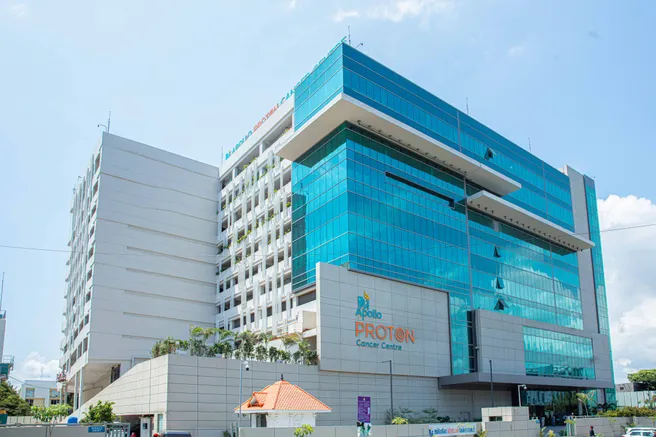
Apollo Proton Cancer Centre (APCC), in Tharamani, Chennai, is the first and only proton therapy centre in South Asia and the Middle East, and India’s first Joint Commission International (JCI) accredited cancer hospital. The 150-bed centre integrates surgical, medical, and radiation oncology — including proton therapy delivered using Pencil Beam Scanning and Intensity-Modulated Proton Therapy (IMPT) — under a single multidisciplinary cancer management team that reviews each case before treatment planning begins.
Because proton therapy’s safety advantage is case-specific, APCC’s multidisciplinary review process is central to how suitability is assessed: the team weighs tumor location, nearby organs at risk, and the patient’s overall treatment plan before recommending proton therapy over conventional radiotherapy.
How UAE-Based Patients Can Access Proton Therapy via Apollo Clinic UAE
For patients in the UAE weighing proton therapy against conventional radiotherapy, the practical next step is usually a specialist opinion based on the specific diagnosis, since the safety case for proton therapy varies by cancer type. Apollo Clinic UAE can support this evaluation through the following general pathway:
1. Initial consultation at Apollo Clinic UAE to discuss the diagnosis and share existing medical records, pathology, and imaging.
2. Case review by the multidisciplinary oncology team at APCC, Chennai, to assess whether proton therapy offers a meaningful safety or precision advantage for that specific case.
3. A treatment recommendation, comparison of expected side-effect profile versus conventional radiotherapy, and cost estimate shared with the patient before travel is arranged.
4. Coordination of travel logistics, appointment scheduling, and visa support for the visit to Chennai.
5. Treatment delivered at APCC as a planned course of outpatient sessions.
6. Post-treatment imaging, side-effect monitoring, and follow-up, coordinated between the APCC team and Apollo Clinic UAE where possible.
Conclusion
The evidence to date suggests proton therapy can reduce the risk of severe side effects compared with conventional radiotherapy for certain cancers, particularly when combined with chemotherapy, without compromising cure rates. It is not a blanket guarantee of greater safety for every diagnosis, and the strength of evidence differs by cancer type. For patients weighing this decision, the most reliable path is a specialist review of the specific tumor, which is the starting point Apollo Clinic UAE offers for patients considering proton therapy at Apollo Proton Cancer Centre, Chennai.
Frequently Asked Questions
Is proton therapy always safer than conventional radiation?
Not always. Evidence supports a meaningful reduction in severe side effects for several cancer types, particularly when radiation is combined with chemotherapy, in pediatric brain tumors, and where sparing nearby organs is a priority. For other cancers, the safety advantage may be smaller or still under study. An oncology team can assess the evidence relevant to a specific diagnosis.
What does the research actually show about side effects?
A 2019 study published in JAMA Oncology found that patients treated with proton therapy and concurrent chemotherapy had severe (grade 3+) side effects requiring hospitalization in about 11.5% of cases, compared with about 27.6% for those treated with conventional photon radiation, with similar cure rates between the two groups.
Does proton therapy cure cancer better than conventional radiation?
Available comparative studies generally show similar cure and survival rates between proton and photon radiotherapy for many cancers. The primary documented advantage of proton therapy is a reduction in side effects, not a difference in cure rates.
Why would a doctor recommend conventional radiation instead of proton therapy?
Conventional radiotherapy remains appropriate, and sometimes preferable, for many cancers, particularly where the tumor is not close to sensitive organs, where proton therapy access is limited, or where the evidence for a proton advantage is not yet well established for that cancer type.
Where can UAE-based patients access proton therapy?
Apollo Proton Cancer Centre in Chennai, India, is the only proton therapy facility in South Asia and the Middle East. UAE-based patients can begin a case evaluation through Apollo Clinic UAE.
How is proton therapy suitability decided for an individual patient?
A multidisciplinary oncology team reviews the tumor type, size, and location, along with which healthy organs are near the treatment area, to determine whether proton therapy offers a meaningful safety or precision advantage over conventional radiotherapy for that specific case.
Medical Disclaimer
This article is intended for general information only and does not replace professional medical advice, diagnosis, or treatment. The comparative safety of proton therapy and conventional radiotherapy varies by cancer type, and the evidence referenced here may not apply to every diagnosis. Please consult a qualified oncology team to discuss options specific to your case.

