

Key Takeaways
Choosing a PCR provider in Dubai is easier when you look beyond a promised result time. Focus on the test you need, the laboratory’s standards, the collection process, and the practical details that affect your appointment.
- Confirm why you need the test and what format your destination or organization accepts.
- Check licensing, accreditation, quality controls, and the experience of the testing team.
- Ask how and where your sample will be collected, including whether home visits are available.
- Compare total prices and realistic turnaround times rather than headline offers alone.
- Review your report carefully and ask what to do if the result is unexpected or inconclusive.
Define your PCR testing needs
Before comparing a pcr test dubai laboratory, clarify the purpose of your test. A travel certificate may have different requirements from a test ordered because of symptoms or a medical concern. Knowing the purpose first helps you ask useful questions and avoid paying for a format that will not be accepted.
COVID-19, respiratory, and other PCR applications
PCR testing can be used for COVID-19 and other infectious or respiratory investigations, depending on the laboratory’s available assays and your clinician’s request. Ask precisely what the test detects, rather than assuming that every PCR appointment covers every infection. If your symptoms are significant or persistent, a medical consultation may be as important as the laboratory test itself.
Travel, workplace, medical, and screening requirements
Travel providers, employers, schools, and healthcare professionals may ask for different information on a report. You may need your full name as it appears on your passport, the collection time, the test method, or a certificate in a particular language. For broader diagnostic planning, you can also review this PCR laboratory guide before booking.
When a PCR test is preferable to a rapid test
A rapid test can be useful when you need an immediate indication, but PCR testing is often chosen when greater analytical sensitivity or formal documentation is needed. The right choice depends on timing, symptoms, exposure, and the requirement you are trying to meet. If you are unwell, let a clinician guide the decision instead of selecting a test solely by price.
Checking deadlines and accepted test formats
Work backward from your flight, shift, appointment, or submission deadline. Confirm when the laboratory starts counting turnaround time, whether weekends are included, and whether the receiving authority accepts the stated method. A result that arrives quickly is still unsuitable if the certificate omits a required identifier or is issued outside the permitted testing window.
Evaluate laboratory quality and reliability
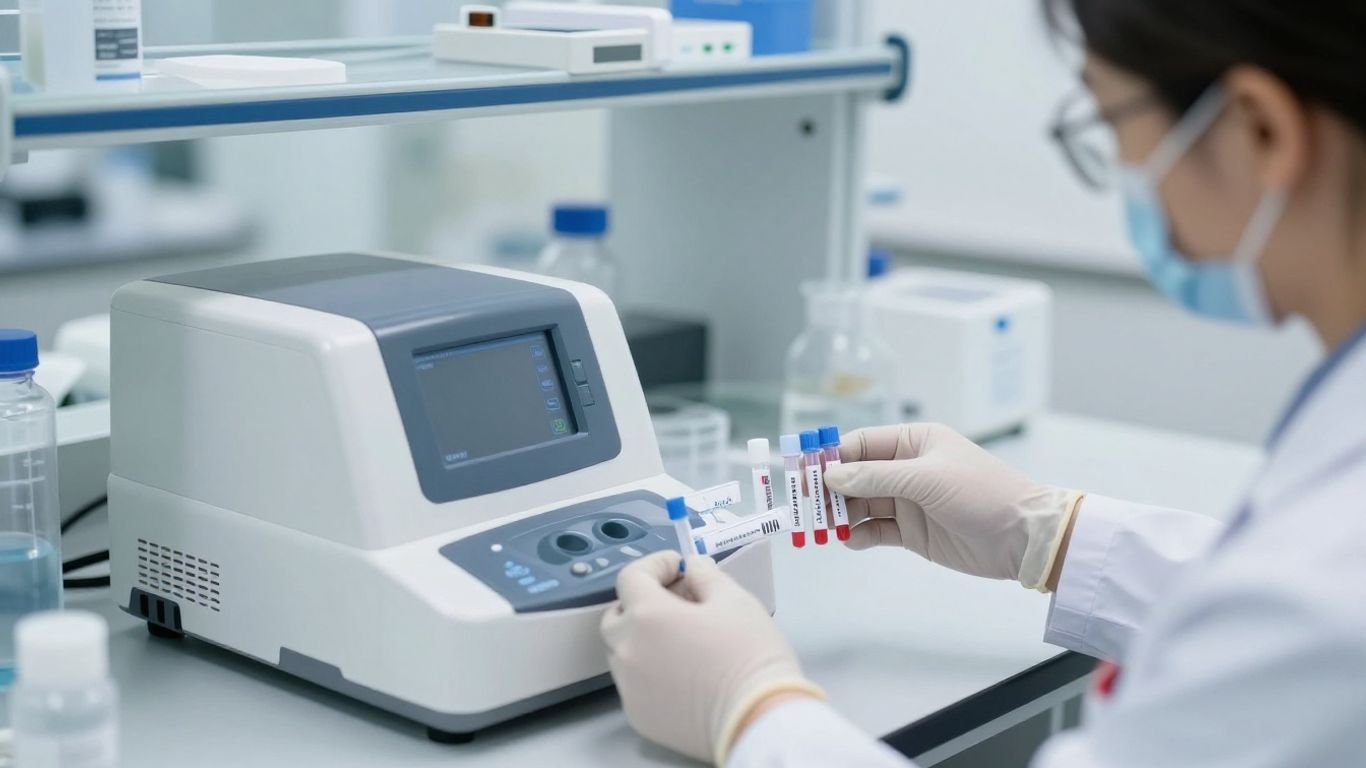
A reliable laboratory should make its standards easy for you to understand. Look for current licensing, clear sample handling procedures, appropriate quality controls, and a dependable way to receive your report. Cost matters, but quality controls matter more when the result will guide travel, work, or medical decisions.
Accreditation, licensing, and quality controls
Ask which authority licenses the facility and whether any relevant accreditation applies to the testing service. You can also ask how instruments, controls, and specimens are checked during routine work. Apollo Clinic UAE describes its laboratory services as being conducted by DHA-licensed professionals, a useful example of the kind of credential information you should look for when comparing providers.
PCR technology, assay validation, and testing accuracy
A laboratory should be able to explain the test method in plain language and identify the specimen type it requires. You do not need to judge technical validation yourself, but you can ask whether the assay is validated for its intended use and how inconclusive samples are handled. Standardized procedures and documented quality checks are sensible signs of a careful testing process; this laboratory testing guidance offers useful background on that workflow.
Qualified staff and clinical oversight
Collection and reporting are not purely administrative steps. Trained staff should verify your identity, collect the specimen correctly, label it accurately, and direct clinical questions to an appropriate professional. If your result relates to symptoms or treatment, ask who can explain what it means and whether a follow-up consultation is available.
Data privacy and secure result delivery
Your report contains personal health information, so ask how it will be delivered and who can access it. A secure patient portal or controlled email process is preferable to an informal message that may be forwarded or misdirected. Before you pay, check whether the provider keeps your identification details and whether you can request a corrected report if a spelling error appears.
Understand the sample collection process
The sample is the foundation of the result, so collection deserves more attention than it often receives. You should know which specimen will be taken, where the appointment will happen, and how the sample will be transported or processed. A calm, clearly explained procedure can make the experience easier, especially if you are testing a child or several family members.
Nasal, throat, saliva, and other specimen types
PCR tests may use nasal, throat, saliva, or another specimen type depending on the assay and the laboratory’s instructions. Do not assume that one collection method can replace another for a travel or medical requirement. Ask which specimen is required, how it will be collected, and whether the report will name the method.
In-laboratory versus at-home collection
An in-laboratory appointment gives you direct access to the collection team and may be convenient if you are already visiting a clinic. Home collection can be helpful when you are unwell, managing children, or unable to travel easily. Apollo Clinic UAE lists convenient home sample collection among its laboratory services, so you can ask whether that option is available for your specific PCR request and area.
Preparing for the appointment
Follow the provider’s instructions rather than relying on general advice from the internet. Before leaving home, it helps to prepare a few practical details:
- Bring the identification document required for registration.
- Confirm the appointment address, collection time, and contact number.
- Ask whether food, drink, smoking, mouthwash, or medication affects the specimen.
- Tell the collector about symptoms, recent testing, or relevant medical instructions.
This preparation reduces avoidable delays and gives the collector information that may affect how the appointment is handled. If you are booking for several people, confirm whether each person needs a separate appointment or identification record.
What can affect sample quality and results
Poor timing, an unsuitable specimen, contamination, leakage, or an incorrectly labeled tube can all create problems. A negative result also has to be interpreted in context, since timing and the stage of an infection may affect detection. Follow the collection instructions closely, and contact the laboratory promptly if you notice an error in your personal details or appointment record.
Compare turnaround times and pricing
Fast processing is useful only when it is realistic and appropriate for your deadline. Ask whether the quoted time begins at collection or when the laboratory receives the specimen, and whether express processing is available every day. A clear price comparison should include collection, reporting, taxes, and any certificate or home-visit charge.

Standard, express, and same-day processing
Most providers separate standard service from urgent or same-day processing. The faster option may have a different cutoff time, limited appointment availability, or a higher fee. Treat a promised window as an estimate unless the provider explains the conditions behind it, especially during busy travel periods.
| Service detail | What to confirm | Why it matters |
|---|---|---|
| Collection time | The appointment cutoff and operating hours | A late sample may move to the next processing cycle |
| Result window | When the turnaround clock starts | Collection and laboratory receipt may not be simultaneous |
| Report format | Digital report, certificate, or both | Your destination or employer may require specific fields |
| Urgent option | Availability, cutoff, and surcharge | Same-day service may not be offered at every hour |
Once you have these details, you can compare providers on the same basis instead of comparing a standard price with an express promise. Keep a small time buffer for traffic, identity checks, and unexpected repeat collection.
What the quoted price includes
Read the quotation carefully and ask whether it includes the collection appointment, laboratory processing, VAT, a digital report, and a travel certificate if one is needed. Some prices cover only the test itself. A short written confirmation can prevent confusion when you are booking for a family or submitting expenses to an employer.
Additional fees for home visits or urgent results
Home collection and urgent reporting may be priced separately from the laboratory test. Ask whether the fee changes by neighborhood, time of day, number of people, or distance from the clinic. You can also clarify the cancellation policy, since a missed home visit may create a new charge or delay.
Balancing speed, accuracy, and affordability
The lowest price is not necessarily the best value if it leaves too little time to correct a rejected certificate or repeat a poor sample. Conversely, an express service may be unnecessary when your deadline is several days away. Choose the option that gives you a credible result window, suitable documentation, and a collection process you can manage comfortably.
Choose a convenient Dubai testing option
Convenience is part of safe, dependable care because a difficult appointment can lead to missed timing or incomplete information. Consider the clinic’s location, opening hours, parking or transport, and the ease of contacting the team. If you are comparing care in Karama, this Dubai clinic selection guide can help you think through access, fees, and booking questions.
Clinic locations and opening hours
Check the exact branch address rather than relying on a general Dubai listing. Confirm opening hours, holiday schedules, parking, and whether PCR collection happens during all advertised clinic hours. Apollo Clinic UAE’s laboratory information includes services in Karama, so ask the clinic to confirm the current location and appointment availability before traveling.
Home collection across Dubai
Home collection may be the most practical choice if you are symptomatic, caring for someone, or arranging multiple tests. Ask whether your address is covered, how the collector will identify themselves, and how long the visit usually takes. You should also confirm whether the home service follows the same reporting process as an in-clinic collection.
Airport and travel-related testing services
Airport testing can sound convenient, but you should not assume that every airport or destination accepts every onsite service. Verify the departure terminal, operating hours, sample cutoff, report format, and whether your airline or destination has a separate rule. If your schedule is tight, arranging testing before reaching the airport may give you more control over timing.
Booking, identification, and payment requirements
Have your passport or other required identification available when you book. Confirm the spelling of every traveler’s name, the phone number for result delivery, accepted payment methods, and whether an appointment deposit is required. Save the confirmation and bring it with you so registration is quick and the collector can match the sample to the correct record.
Review results and follow-up steps
Receiving a report is not always the end of the process. Take a moment to check your name, date of birth or passport number, collection time, test method, and result before you submit it. If the wording is unclear, contact the laboratory or your clinician instead of trying to interpret unfamiliar technical terms alone.
How PCR results are reported
Reports commonly identify the specimen, collection date, method, and finding, although the exact layout varies. A travel certificate may contain additional identifiers or a QR code, while a medical report may be sent to your clinician for interpretation. Keep a secure copy and check whether the recipient wants a PDF, printed certificate, or direct verification.
Understanding positive, negative, and inconclusive findings
A positive result generally means the target was detected, while a negative result means it was not detected in that specimen at that time. An inconclusive or invalid result may require repeat collection or clinical review. The meaning depends on symptoms, exposure, timing, and the test’s intended use, so ask a healthcare professional if the result does not fit your situation.
What to do after an unexpected result
If your result is unexpected, contact the testing provider or a clinician promptly and ask whether a repeat test or consultation is appropriate. Follow current public-health, workplace, school, or travel instructions that apply to your circumstances. Do not alter a report or book a second test solely to obtain a preferred result; focus on accurate documentation and appropriate medical advice.
A short educational video can help you understand the general testing journey, but it cannot replace advice based on your symptoms, history, or destination rules. Use the report and professional guidance together when deciding what to do next.
Confirming whether certificates meet destination requirements
Check the destination’s official requirements close to your departure date because rules can change. Confirm the acceptable test type, collection window, laboratory credentials, certificate language, personal identifiers, and verification method. If any point is unclear, ask the airline, destination authority, employer, or laboratory before the appointment rather than after the report arrives.
Conclusion
The best PCR provider in Dubai is the one that matches your purpose, deadline, documentation needs, and comfort with the collection process. By checking laboratory standards, asking about total costs, and reviewing the final report carefully, you can make a calmer and more informed choice.
Frequently Asked Questions
How early should you book a PCR test in Dubai?
Book as soon as you know your deadline, especially if you need travel documentation or same-day processing. Leave extra time for traffic, appointment availability, weekends, and a possible repeat collection.
Is a PCR test always better than a rapid test?
No. The appropriate test depends on the reason for testing, the timing, your symptoms, and the rules of the organization or destination requesting the result. A clinician or receiving authority can help you choose.
Can you arrange PCR sample collection at home?
Many providers offer home collection in some Dubai neighborhoods, but coverage, appointment times, specimen types, and fees vary. Confirm these details before paying or assuming that the service is available at your address.
What identification do you need for a PCR appointment?
You will usually need the identification document used for registration, such as a passport or Emirates ID, depending on the provider and purpose of the test. Use the exact spelling that must appear on the final report.
What should you do if your PCR result is inconclusive?
Contact the laboratory or a healthcare professional and ask whether the sample should be repeated. Avoid relying on an inconclusive report for travel, work, or medical decisions until the required follow-up is complete.
How can you compare PCR test prices fairly?
Compare the full cost, including collection, reporting, taxes, home visits, urgent processing, and certificates. Also compare the realistic turnaround window and whether the report meets the requirement you are trying to satisfy.
Can a PCR certificate be used for international travel?
Only if it meets the current rules of the destination, airline, or transit location. Check the test method, collection window, laboratory status, personal details, language, and verification requirements before departure.